
Commission on the Status of Women, Seventieth Session (CSW70) – General Discussion
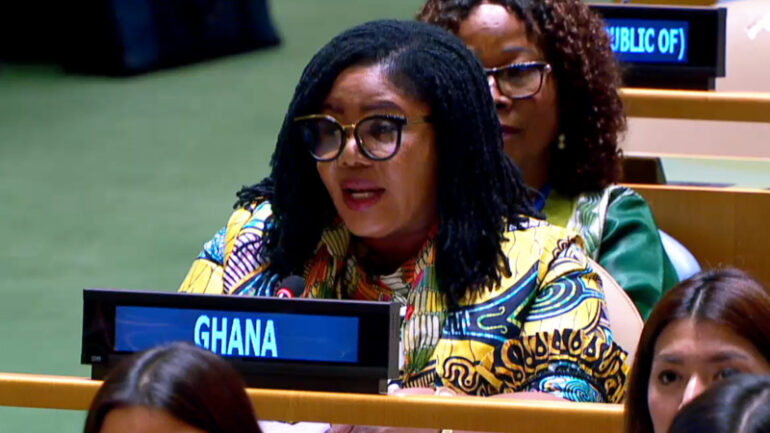

Dr. Agnes Naa Momo Lartey (MP)
Minister for Gender, Childen and
Social Protection of the Republic of Ghana
March 09, 2026
GENERAL DISCUSSION OF THE 70TH SESSION OF THE COMMISSION ON THE STATUS OF WOMEN (CSW70)
Chairperson, Excellencies, Distinguished Colleagues Ministers, It is an honour to address the seventieth session of the Commission on the Status of Women. This session provides a valuable opportunity to reflect on and to renew our collective commitment to advancing gender equality and strengthening access to justice for all women and girls.
Chairperson,
In Ghana, ensuring access to justice for all women and girls is not only a legal obligation, but also a moral and developmental imperative. Justice remains a critical pillar for achieving equality, peace, the full realization of human rights and sustainable development, ensuring that no one is left behind. Guided by this commitment, Ghana has taken deliberate steps over the years
to strengthen access to justice for all citizens. We have pursued legal and policy reforms to eliminate discriminatory provisions, expanded legal aid services and strengthened institutions mandated to protect women and girls. Key among these frameworks are:
• The Affirmative Action (Gender Equity) Act, 2024 (Act 1121);
• The National Gender Policy (2025–2034);
• The Social Protection Act, 2025 (Act 1148);
• The Cybersecurity Act, 2020 (Act 1038);
• The Land Act, 2020 (Act 1036); and
• The Environmental Protection Act, 2025 (Act 1124)
Chairperson,
Ghana continues to invest in building gender-responsive justice systems. This includes the training of judicial officers, law enforcement agencies, social service providers and paralegals, including those operating within market centres, to respond effectively and sensitively to cases involving women and girls. We are also intensifying community engagement to empower women and girls with knowledge of their rights so that they are better positioned to seek redress, demand accountability and challenge injustice. In addition, Ghana has strengthened efforts to address gender-based violence through institutional reforms and survivor-centred responses. The establishment of specialized units within the Ghana Police Service, the operationalization of gender desks at both national and local levels, and strengthened collaboration among the judiciary, social welfare services and civil society organisations are improving reporting, case management and prosecution.
Chairperson,
While progress has been made, we recognise that more must be done. Ghana therefore remains committed to strengthening institutions, expanding access to justice mechanisms and ensuring that no woman or girl is denied justice due to social, economic or structural barriers.
In conclusion,
Ghana remains firmly committed to building an inclusive and equitable justice system that upholds the rights and dignity of all women and girls. We stand ready to work with partners at the national, regional and global levels to dismantle discriminatory laws, challenge harmful social norms and transform justice systems in line with our international commitments.
We look forward to a future where access to justice is not merely an aspiration, but a lived reality for every woman and girl.
I thank you.