Commission on the Status of Women (CSW70) – Ministerial Roundtable Discussion
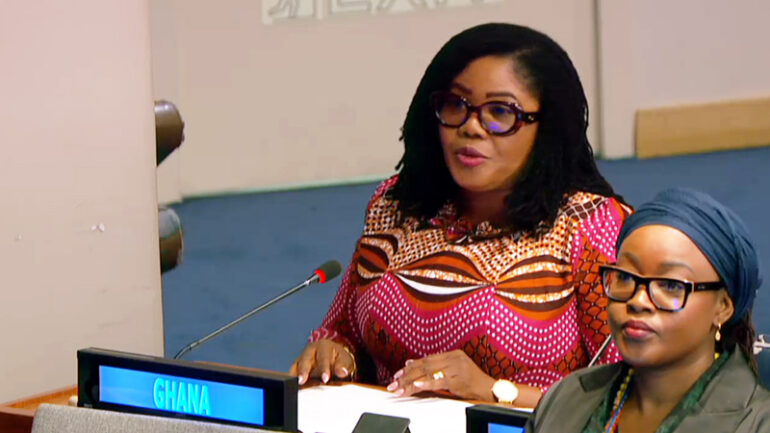

Dr. Agnes Naa Momo Lartey (MP)
Minister for Gender, Childen and
Social Protection of the Republic of Ghana
Conference Room 4, UNHQ
March 10, 2026, New York
MINISTERIAL ROUNDTABLE DISCUSSION ON THE PRIORITY THEME:
“ENSURING AND STRENGTHENING ACCESS TO JUSTICE FOR ALL WOMEN AND GIRLS,
INCLUDING BY PROMOTING INCLUSIVE AND EQUITABLE LEGAL SYSTEMS,
ELIMINATING DISCRIMINATORY LAWS, POLICIES AND PRACTICES AND ADDRESSING
STRUCTURAL BARRIERS”
Chairperson, Excellencies, Distinguished Colleagues,
Ghana appreciates the opportunity to participate in this Ministerial Roundtable and to share our experiences while learning from the valuable perspectives of fellow Ministers on advancing access to justice for women and girls.
Chairperson,
In Ghana, access to justice is both a constitutional obligation and a development imperative. Our efforts are guided by the principles of equality and non-discrimination enshrined in the 1992 Constitution and reinforced through our international commitments, including the Convention on the Elimination of All Forms of Discrimination against Women and the 2030 Agenda for Sustainable Development. Despite progress, barriers to justice persist. Limited awareness of legal rights, financial constraints and socio-cultural norms continue to discourage many women and girls from seeking justice, particularly in cases of violence and discrimination.
To address these challenges, Ghana has strengthened its legal and policy framework. Key legislation, including the Domestic Violence Act, the Human Trafficking Act and the Children’s Act, provide important protections for women and girls. These laws are supported by institutional mechanisms such as the
Domestic Violence and Victim Support Unit of the Ghana Police Service and the Legal Aid Commission, which provide assistance to survivors of abuse and other vulnerable groups.
Chairperson,
Partnerships with civil society and women’s rights organisations have been critical in expanding access to justice, particularly at the community level. Through legal literacy programmes, paralegal services, community advocacy and survivor support initiatives, these partnerships are helping to bridge gaps between formal justice systems and the communities they serve.
These collaborative efforts have also contributed significantly to recent reforms, including the passage of the Affirmative Action (Gender Equity) Act, 2024 and the development of the National Gender Policy (2025–2034).
Ghana also recognises the important role of traditional authorities in ensuring justice at the community level. We continue to work with the National House of Chiefs and Queen Mothers to promote the alignment of customary dispute resolution mechanisms with constitutional and international human rights standards.
At the same time, Ghana is exploring how digital innovation can expand access to justice. Efforts are underway to strengthen digital case management systems, improve reporting mechanisms for gender-based violence and expand public access to justice services through technology, while addressing emerging risks such as online harassment and technology-facilitated violence.
Chairperson,
Ghana remains committed to strengthening laws, institutions and partnerships to ensure that justice systems are accessible, responsive and inclusive for all women and girls.
I thank you.