
United Natons General Assembly on High-Level Meeting on HIV/AIDS

- Posted by admin
- Posted in News, Statement & Remarks
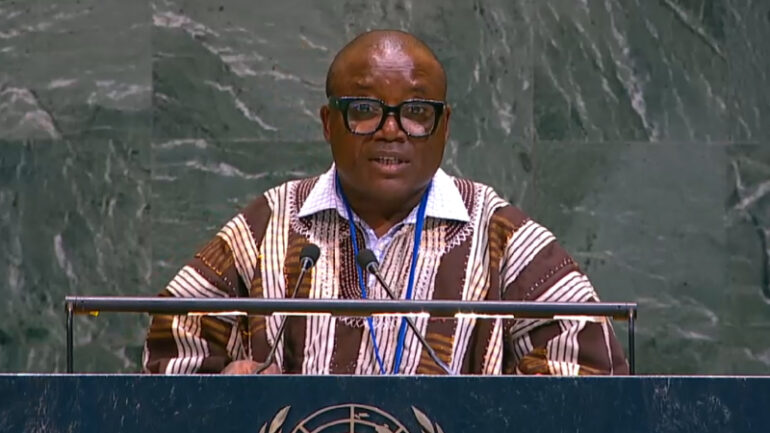
Madam President,
Ghana welcomes this High-Level Meeting and aligns itself with the statement delivered on behalf of the African group. For many countries, especially in Africa, the central challenge is no longer only how to accelerate progress, but how to sustain it. At a time of shrinking external support, growing fiscal pressures and persistent inequalities, the HIV response requires renewed commitment grounded in fair transition and global solidarity.
For Ghana, the message is clear. The next phase of the response must be built on sustainable financing, resilient systems and shared responsibility. It must also be a moment for collective introspection. If we are to end AIDS by 2030, we must learn from missed targets and focus on the actions that will have the greatest impact in this final stretch. Ghana is enhancing its HIV response by focusing on sustainability planning, mobilising domestic resources, integrating HIV services into broader health systems, and forging robust partnerships with communities, civil society, the private sector and development partners. Our unwavering commitment is to prevention, treatment, care and support, delivered with dignity and free from stigma and discrimination.
But national ownership cannot mean global withdrawal. Across Africa, fiscal pressures, debt burdens and declining development assistance are creating real risks to treatment continuity, prevention programmes, community-led responses and services for those most affected by HIV. A disorderly transition from external support would not be sustainable; it would be a setback. Ghana therefore calls for a fair, predictable and well-managed transition that safeguards essential HIV services, supports domestic financing, enhances primary health care, and aligns
investments behind national plans, budgets and accountability systems.
Excellencies,
The Accra reset, led by His Excellency President John Dramani Mahama, embodies a transformative vision for development cooperation. It focuses on practical sovereignty, execution capacity and shared prosperity. By championing the Accra Reset, Ghana is pioneering a cooperative model that harmonises financing, enhances peer learning, reforms governance for effective delivery, and fortifies sovereign implementation capacity. In the HIV response, this involves fostering stronger African leadership, ensuring fairer financing, promoting local and regional production of medicines and diagnostics, empowering community leadership, and guaranteeing equitable access to science and innovation.
Madam President,
As Member States prepare to adopt a new Political Declaration, Ghana underscores the need to uphold equity, shared responsibility and global solidarity in the HIV response. Ending
AIDS by 2030 demands sufficient and predictable financing, equitable access to medicines, technologies, and innovation, robust backing for community-led initiatives, and a balanced
collaboration between national and international efforts. We have the tools and evidence; now we need political courage and solidarity to act urgently. Ghana is ready to collaborate with Member States, communities and partners to achieve our shared commitments.
I thank you.