
Conference of States Parties to the Convention on the Rights of Persons with Disabilities
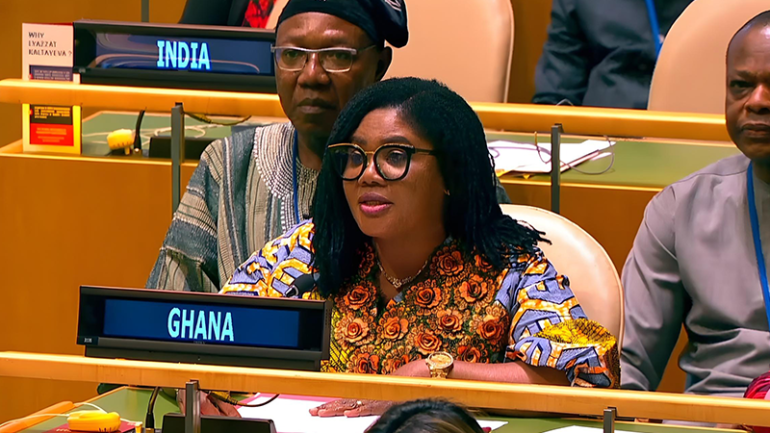

- Posted by admin
- Posted in News, Statement & Remarks
Dr. Agnes Naa Momo Lartey (MP)
Minister for Gender, Childen and
Social Protection of the Republic of Ghana
UN General Assembly Hall
June 9, 2026, New York
GENERAL DISCUSSION OF THE 19TH SESSION OF THE CONFERENCE OF STATES PARTIES (COSP19) TO THE CONVENTION ON THE RIGHTS OF PERSONS WITH DISABILITIES (CRPD)
Chairperson, Excellencies, Distinguished Colleagues Ministers, Twenty years after the adoption of the Convention on the Rights of Persons with Disabilities, we have an important opportunity to reflect on the progress achieved, consolidate the gains made, and shape the next phase of implementation in a rapidly changing world. For Ghana, this is both a moment of reflection and a call to action.
Over the past two decades, Ghana has remained steadfast in advancing the rights, dignity and inclusion of persons with disabilities. Guided by the principles of the Convention, we have continued to strengthen our legislative, policy and institutional frameworks to promote equality, accessibility and participation.
A key priority has been strengthening our legal framework. Ghana is advancing the Persons with Disabilities Bill, 2026, currently before Cabinet, to align our national legislation more fully with the Convention and strengthen enforcement mechanisms. Cabinet has also approved the ratification of the Protocol to the African Charter on the Rights of Persons with Disabilities, while its core principles have already been incorporated into the proposed legislation.
We have also taken concrete steps to promote economic empowerment and social protection. The allocation of the District Assemblies Common Fund for Persons with Disabilities has been increased from 3 per cent to 5 per cent to support livelihoods, education and healthcare. In addition, more than 147,000 persons with disabilities have been enrolled on the Livelihood Empowerment Against Poverty Programme, with access to the National Health Insurance Scheme under the BIG LEAP initiative.
To expand opportunities and foster inclusion, Ghana has implemented a Free Tertiary Education Policy for Persons with Disabilities and has mainstreamed the Ghana Accessibility Standard into building regulations. Through our Digital Acceleration Project, persons with disabilities are being equipped with digital skills and assistive technologies to participate more fully in an increasingly digital world.
While we celebrate these achievements, we recognize that challenges remain. Employment gaps, attitudinal barriers and unequal access to assistive technologies continue to limit opportunities for many persons with disabilities.
As we look to the future, we must ensure that digital transformation, emerging technologies and climate action become pathways to inclusion rather than new sources of exclusion. Twenty years after the adoption of the Convention, our responsibility is not only to protect rights, but to expand opportunities and remove barriers to full participation. Ghana stands ready to work with all States Parties and partners to build a future in which persons with disabilities are empowered not only to benefit from development, but to help shape it.
I thank you.